
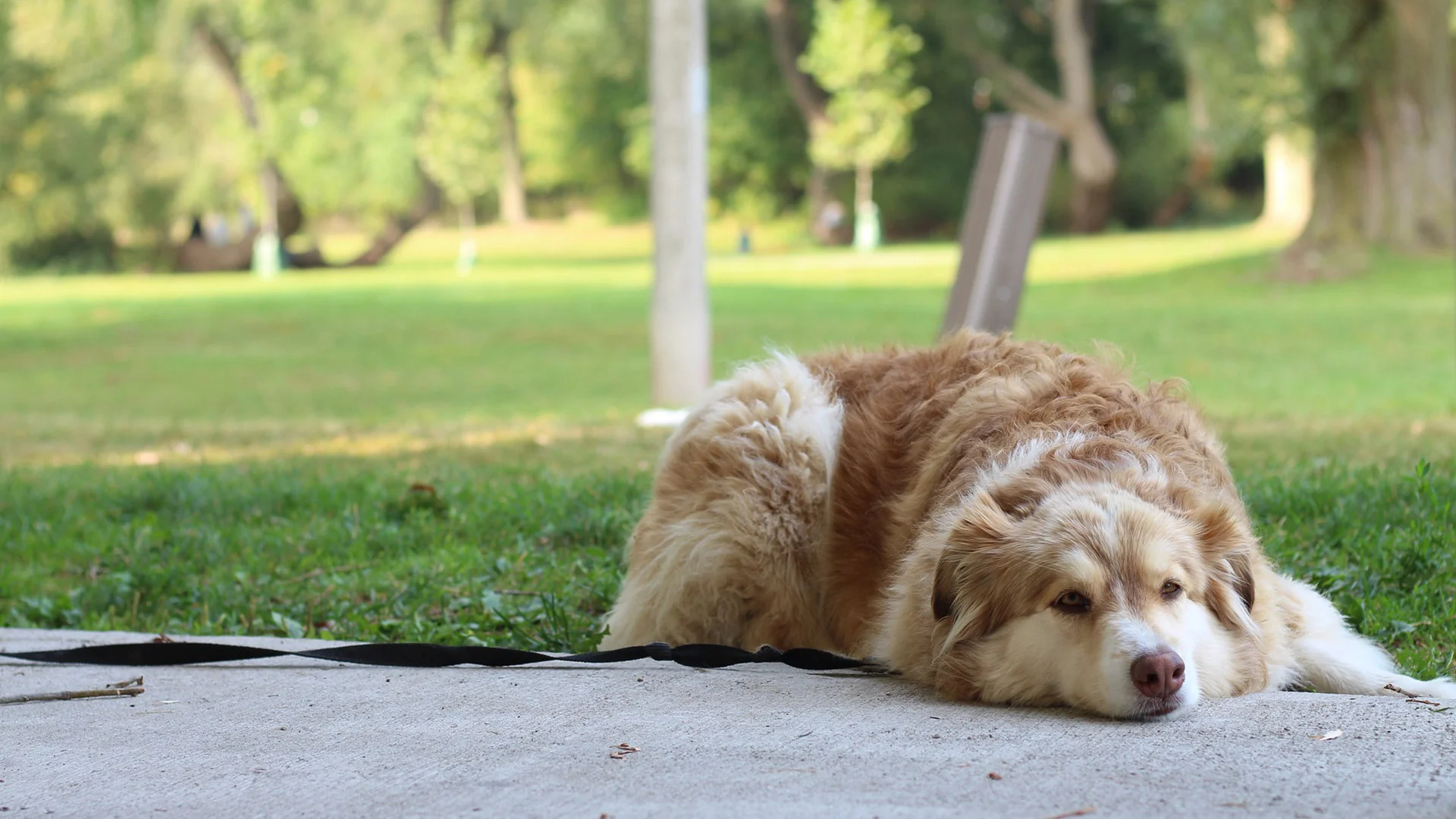
Hot weather changes how long and comfortably a dog can work. Plan outings around the conditions and the individual dog’s health, coat and stamina.
- Keep dogs out of parked cars. Cracking a window does not make a hot car safe. If you find a dog in distress, contact emergency services; rescue powers and liability depend on local law.
- Plan for heat. Choose cooler hours, shade and shorter outings. Stop work if the dog is struggling.
- Protect paws. Avoid hot pavement and choose cooler surfaces. A brief hand test cannot guarantee safety. Limping or damaged pads needs veterinary advice.
- Offer drinking water. Bring fresh water and a suitable bowl, and provide regular opportunities to drink.
- Know the warning signs. Heavy panting, weakness, vomiting, confusion or collapse can require urgent veterinary care. Move out of the heat and call a veterinarian promptly rather than waiting for symptoms to settle.
- Manage sun exposure. Ask your veterinarian whether protection is needed and which product is appropriate. Human or baby sunscreen is not automatically safe for a dog.
- Avoid unfamiliar plants and chemicals. Keep the dog away from treated lawns, spills and plants whose safety you have not checked.
- Choose safe play. Supervise toys and remove broken or easily swallowed items. Water activities need an individual safety plan.
- Prepare for fireworks. Provide a comfortable retreat and discuss severe noise fear with your veterinarian before the event. Comforting a frightened dog is appropriate.
- Adjust the workload. Heat, allergies, illness and medication can affect readiness. Arrange backup assistance when the dog needs rest.