
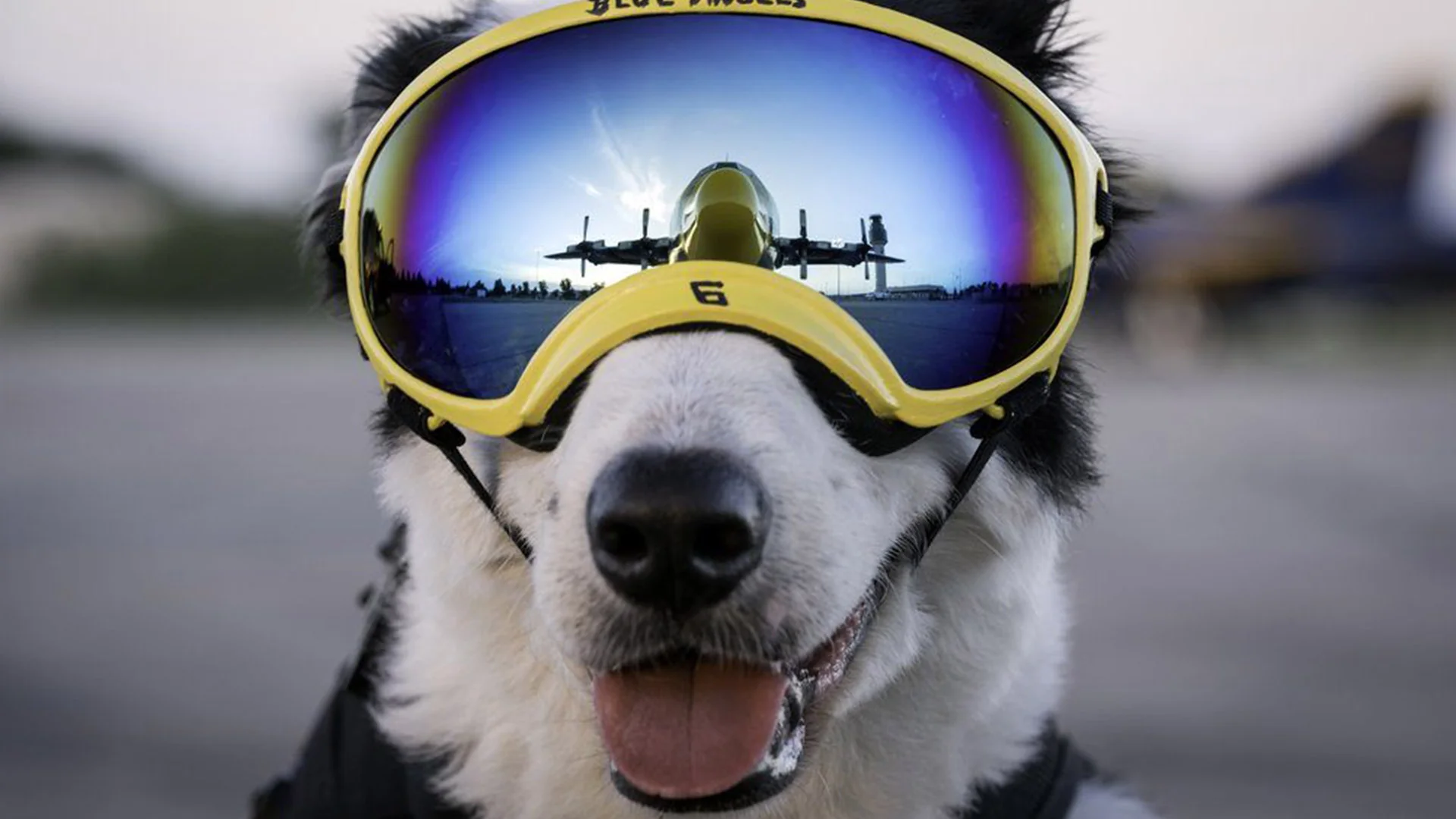
Some work environments call for protective equipment, but the first question is whether the dog should be exposed at all. Equipment does not make every workplace, concert, aircraft or outdoor activity safe.
Assess the actual hazard
Ask the responsible safety professional and your veterinarian about the exposure, alternatives and appropriate equipment. Human injury statistics cannot establish canine protection or lifespan benefits. Ordinary indoor lighting does not automatically require dog goggles.
Check eye protection
Consider fit, field of view, ventilation and the manufacturer’s evidence for the particular hazard. A product described as goggles is not automatically suitable for chemicals, welding, impacts or heat. Do not let your dog put its head out of a moving car.
Check hearing protection
Noise reduction depends on the product and seal. It is not a guarantee of safe exposure, and the dog may hear cues differently. Avoid unnecessary intense noise and give access to a quiet place. Ear wraps do not universally prevent water, infection or hearing loss.
Introduce equipment gradually
Reward brief voluntary contact and comfortable wear in a quiet setting. Stop for distress, rubbing, poor fit or interference with movement. Review wear limits and cleaning directions.
Rex Specs, Doggles, Mutt Muffs and Aquabandit were mentioned in AP’s original article. Verify current products, specifications and prices with the manufacturer; the old prices and performance claims are not a current comparison.