

Describing a dog as “alpha” often turns a specific behavior problem into an imagined contest for control. It gives you little useful information about what happened, why it happened or what the dog needs to learn.
What wolf research actually tells us
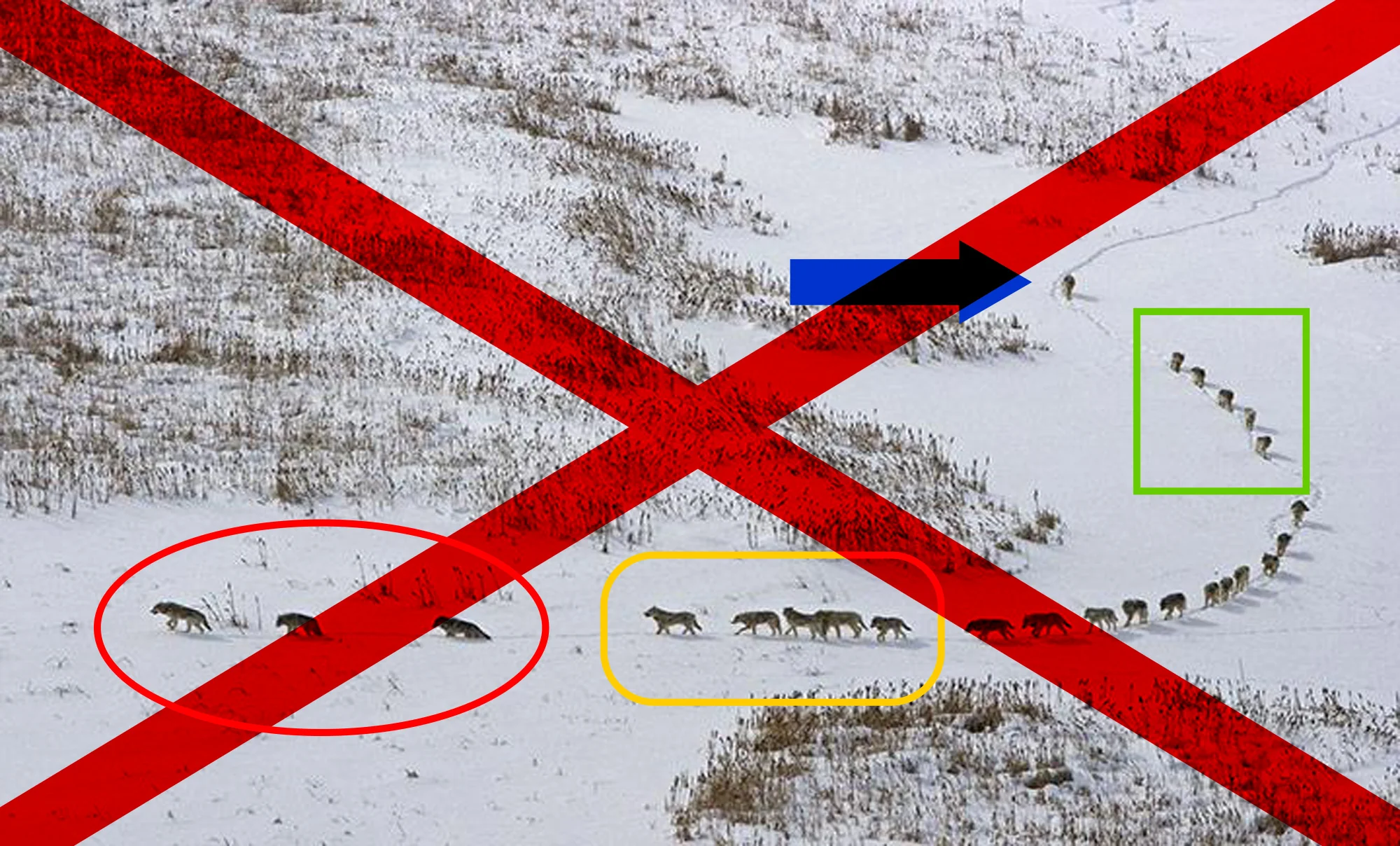
Research on wild wolves challenged the familiar picture of a pack constantly fighting for an alpha position: many natural packs are family groups led by breeding parents. That finding does not mean social relationships never exist or that all aggression has one cause.
Dogs have ancestry in ancient wolf populations. They have also undergone domestication and live in different social settings. Neither ancestry nor a simplified wolf analogy tells you to intimidate a dog or compete with it.
Describe the behavior
Instead of “he is dominant,” write what you observed: the dog froze when someone approached its food, jumped during a greeting or failed to return in a distracting place. Consider the surroundings, previous learning, stress, pain and access to resources.
Use management to prevent unsafe situations and reward the behavior you want. Teach skills in manageable steps. Avoid alpha rolls, physical confrontations and punishment of warning signals.
For aggression, guarding or sudden changes, seek veterinary evaluation and qualified behavior help. Do not assume fear is the only possible cause, or try to settle the issue by showing the dog who is boss.
Sources
- Nature: Ancient wolf ancestry of dogs
- Mech: Wild wolf-pack social organization
- AVSAB: Dominance theory