

Plan around your access needs, local hazards and your dog’s care. Follow evacuation orders promptly; belongings are replaceable.
- Arrange help and transport. Identify accessible routes, a backup destination and people who can help if your usual transport or caregiver is unavailable.
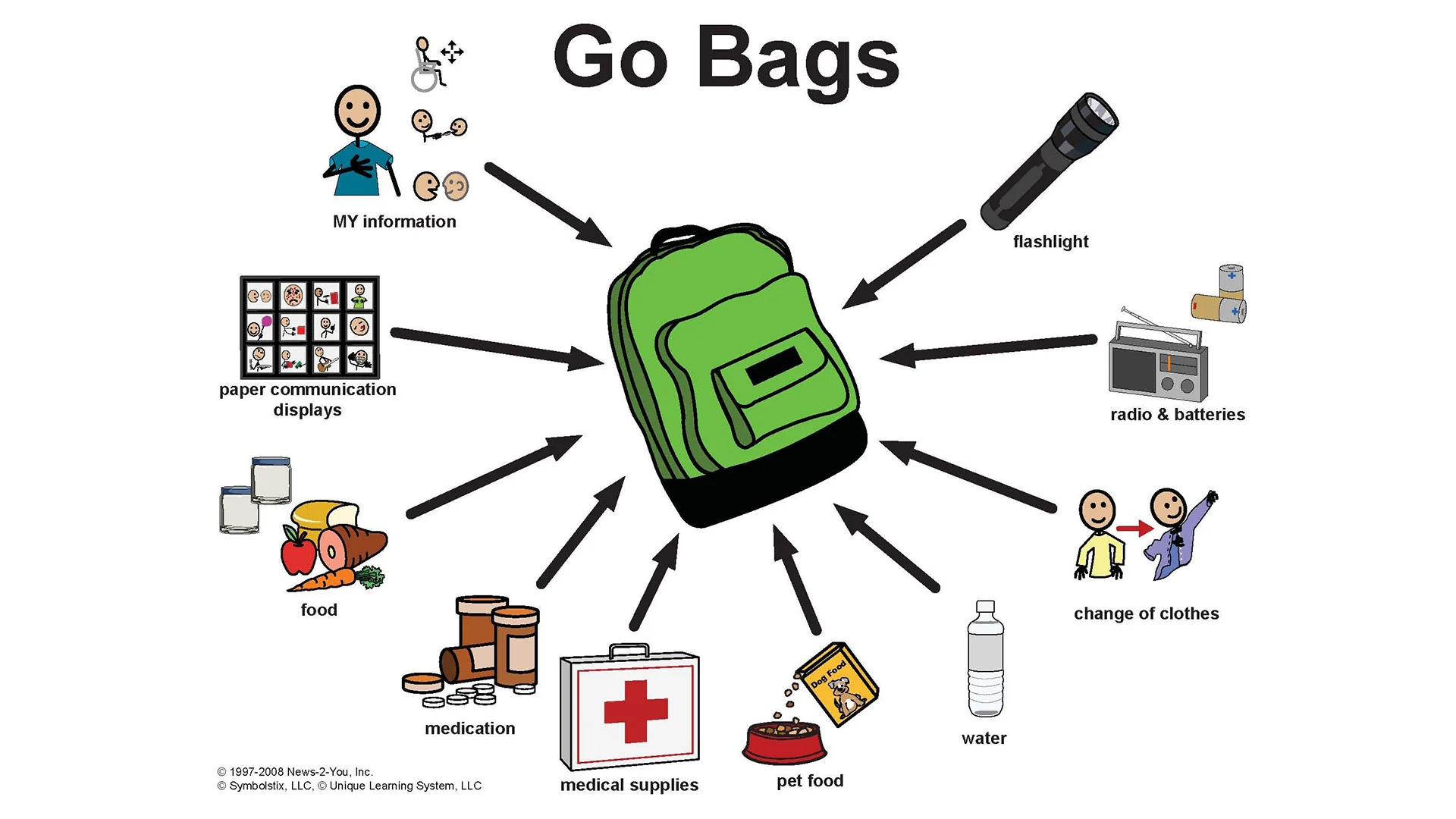
- Pack a kit. Include food, drinking water, bowls, medications, leash, waste supplies, identification, care instructions and veterinary records. Plan for several days and adjust for local emergency guidance and storage limits.
- Prepare identification. Keep contact details and the microchip record current. Carry recent photographs and a backup contact.
- Practice calmly. Reward short, comfortable rehearsals of travel and settling. A familiar crate can help some dogs, but it is not an ADA access requirement.
- Plan shelter care. Ask about accessibility and space. ADA-covered emergency shelters generally must accommodate service dogs. The handler remains responsible for care; arrange backup help if necessary.
- Include medical needs. Keep your own medications, equipment, charging arrangements and written emergency plan available. Share only the information necessary for assistance.
Ask your veterinarian before using any calming medication or supplement. Melatonin, valerian and other products are not automatically harmless or suitable. Do not store fuel indoors or improvise utility shutoffs; follow the responsible agency’s directions.
When conditions change, prioritize leaving safely. Do not delay evacuation to protect furniture or finish preparations.