

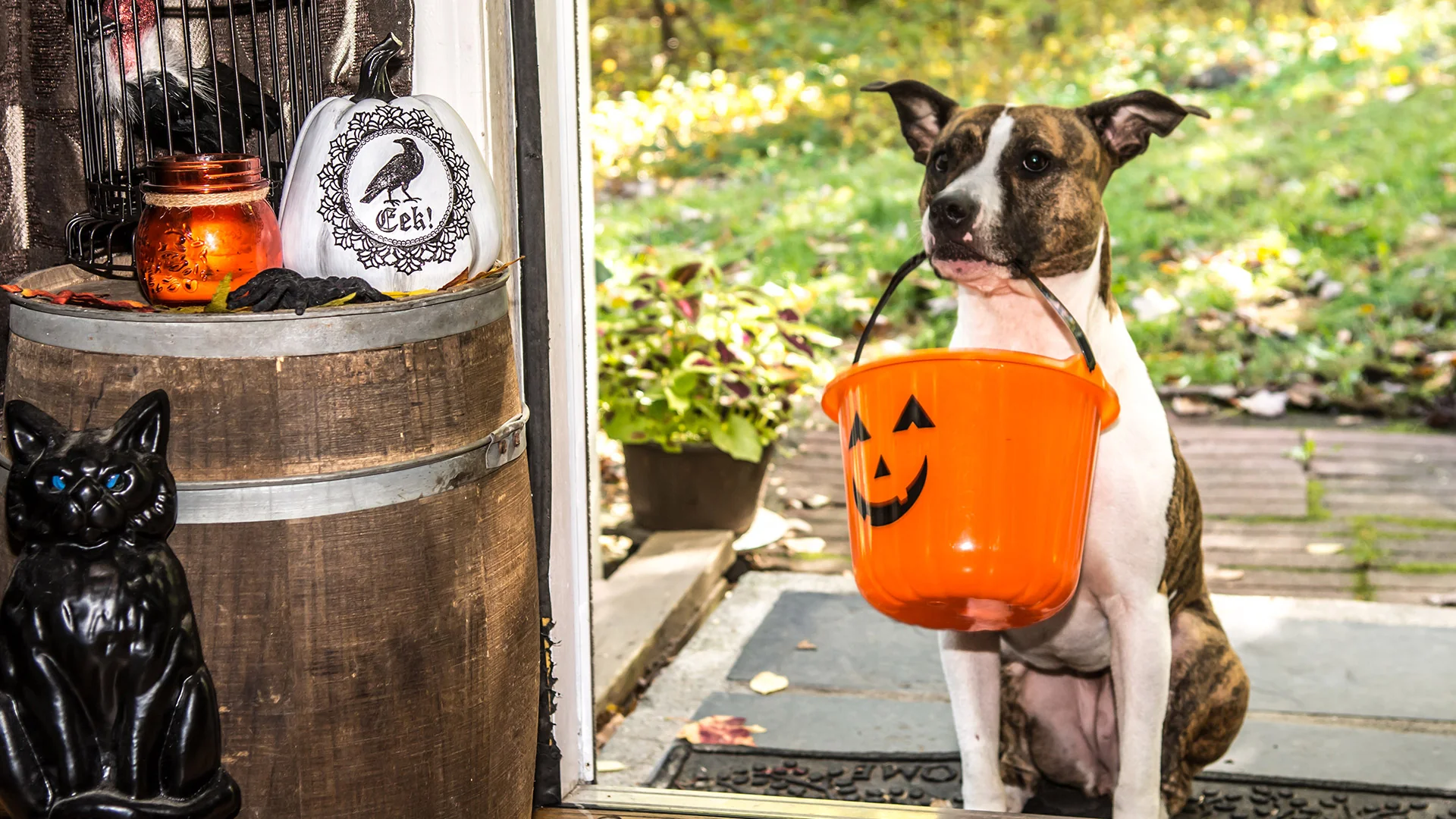
Costumes, noise, crowds and unfamiliar movement can make Halloween demanding. Choose an outing that suits your dog and your own needs, with an easy way to leave.
Choose a manageable setting
A quieter event, shorter visit or separate care arrangement may work better than a crowded haunted attraction. Do not use frightening surprises as a training test. Reward comfortable responses, keep distance and leave if the dog is distressed.
Prevent food hazards
Keep chocolate, xylitol-containing sweets, alcohol and wrappers away from the dog. Training is helpful, but active management still matters. If your dog may have eaten something dangerous, contact a veterinarian promptly; do not wait for symptoms or induce vomiting without instructions.
Check equipment and visibility
Use well-fitting, maintained equipment and current contact details. Reflective gear or a secure dog-safe light can help others see the dog. Keep glow sticks and necklaces away from chewing; they are not suitable improvised collars.
Set boundaries
Ask others to give space and avoid distracting the dog. You do not have to accept unwanted touching or explain your disability. Avoid crowded routes and approaching dogs when needed.
Allow an exit
Arrange transport and backup assistance before the event. Fear or fatigue is a reason to change the plan, not evidence that the handler failed. Costumes should not restrict breathing, sight or movement, and the dog does not need one to participate.