

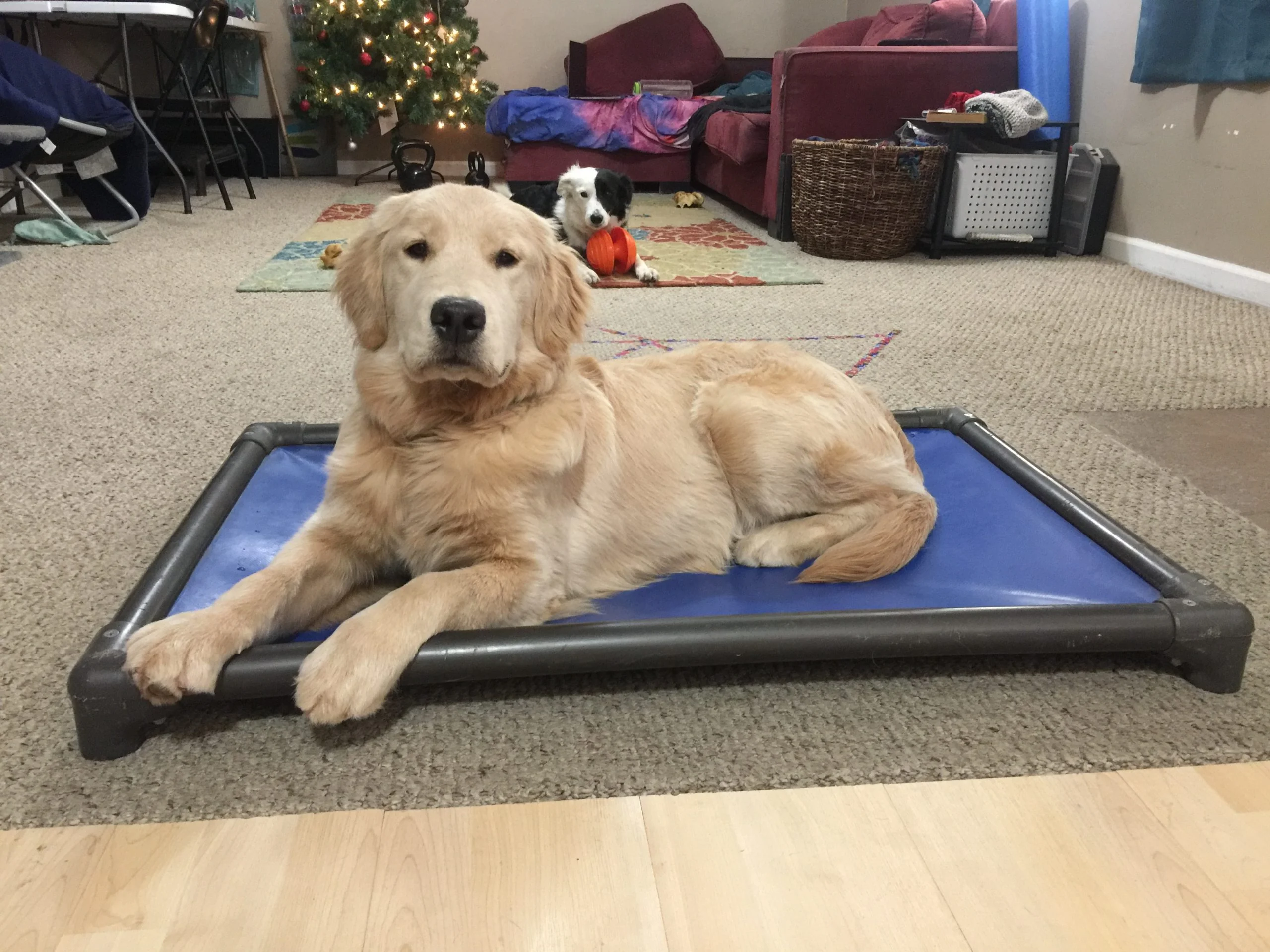
Stationing, often called mat or place training, teaches a dog to go to a chosen area and remain there for an agreed period. It can support settling and household routines.
Choose a safe station
Use a comfortable mat, bed or appropriate low stable platform with enough room for natural movement. Avoid crate tops or elevated surfaces simply to create a clearer edge.
Teach the foundation
- Reward voluntary interest in or movement onto the station.
- Reward a comfortable position there; lying down is not mandatory for every use.
- Give a clear release and let the dog move away.
- Build duration in small increments, with breaks for relief, movement and rest.
- Add distance or mild distraction gradually, keeping the dog comfortable.
Define a practical goal, such as resting on a mat near your chair. A paw extending beyond the mat is not inherently failure; the goal should fit comfort and the actual setting.
Keep expectations realistic
Training does not make duration and distractions irrelevant. An animal may need to move, respond to a task, avoid distress or take a break. Do not require a two-hour immobile stay or assume a stationed dog needs no supervision.
Stationing is not a substitute for safe separation between animals or for removing hazards. If the dog struggles, reduce difficulty and reassess its needs instead of withholding every form of support until it complies.