

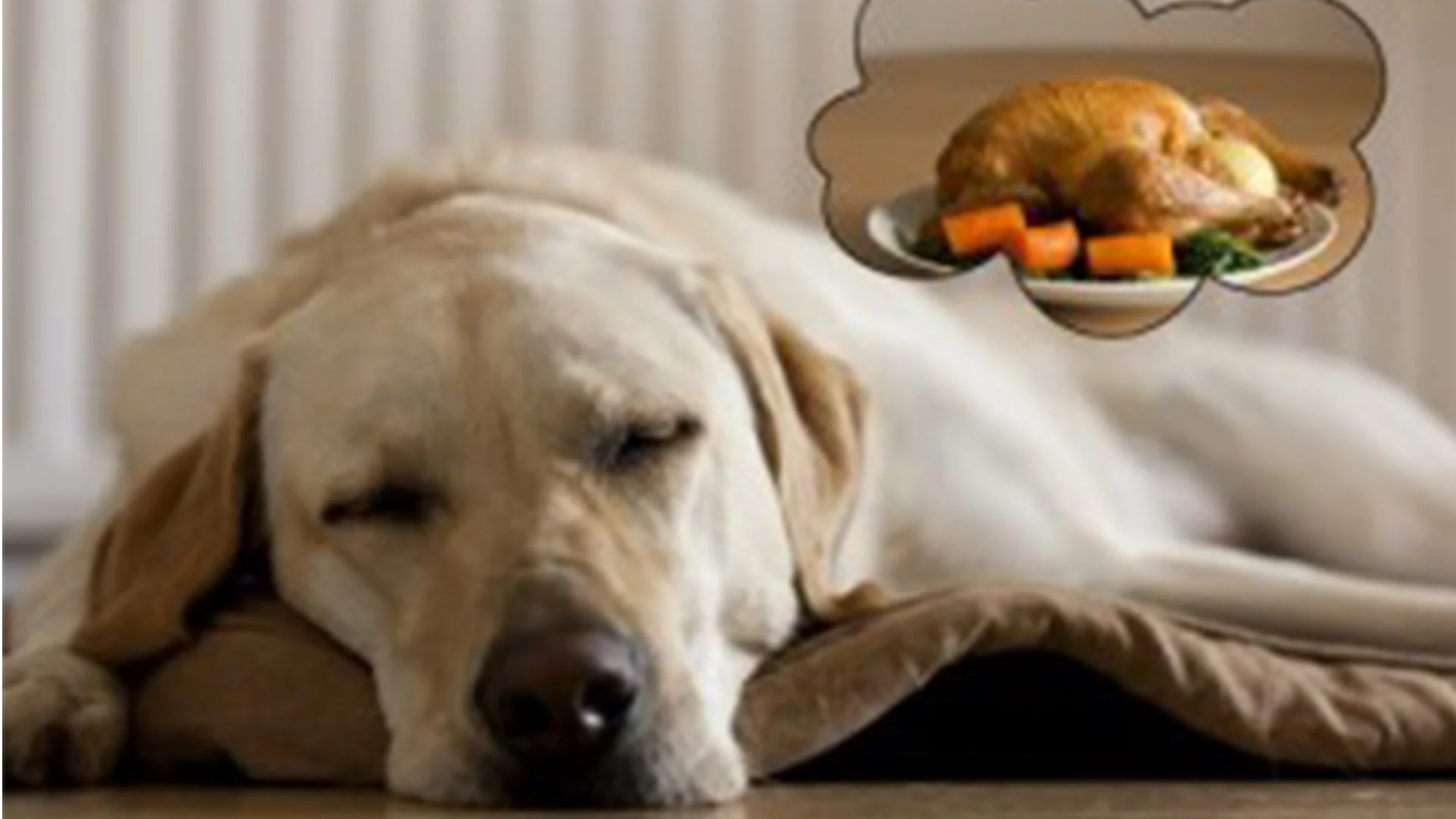
Keep holiday meals and scraps out of reach. A food that is safe for a person is not necessarily suitable for a dog, and a busy gathering makes accidental ingestion easier.
Foods to avoid sharing
- Chocolate, grapes, raisins, xylitol-containing products and alcohol.
- Onion- or garlic-containing dishes and rich fatty leftovers.
- Bones, corn cobs, skewers, string, wrappers and other objects that can be swallowed.
- Raw yeast dough and uncooked animal products.
- Food whose ingredients, seasoning or storage history you cannot verify.
Toxicity depends on the substance, amount and individual dog. Do not rely on a two-pound chocolate threshold, a fixed grape amount or reassurance that fat cannot hurt. Contact a veterinarian or animal poison service promptly after a concerning ingestion, with the ingredient, amount and timing. Do not induce vomiting without advice.
If you offer a treat
For a dog whose health and diet permit it, a small amount of plain, fully cooked, boneless turkey or an appropriate plain vegetable may be an option. Avoid skin, seasoning, rich sauces and large portions. Check with your veterinarian for allergies, pancreatitis, prescribed diets or other concerns.
You do not need to share the meal. The dog’s normal food or a familiar safe treat can be a better choice. A whole raw sweet potato is not a universally safe chew, and raw turkey brings food-safety risks rather than a guaranteed benefit.
Manage the gathering
Ask guests not to feed the dog, secure bins and leftovers, and provide a comfortable rest area. Treats do not replace an appropriate complete diet.