

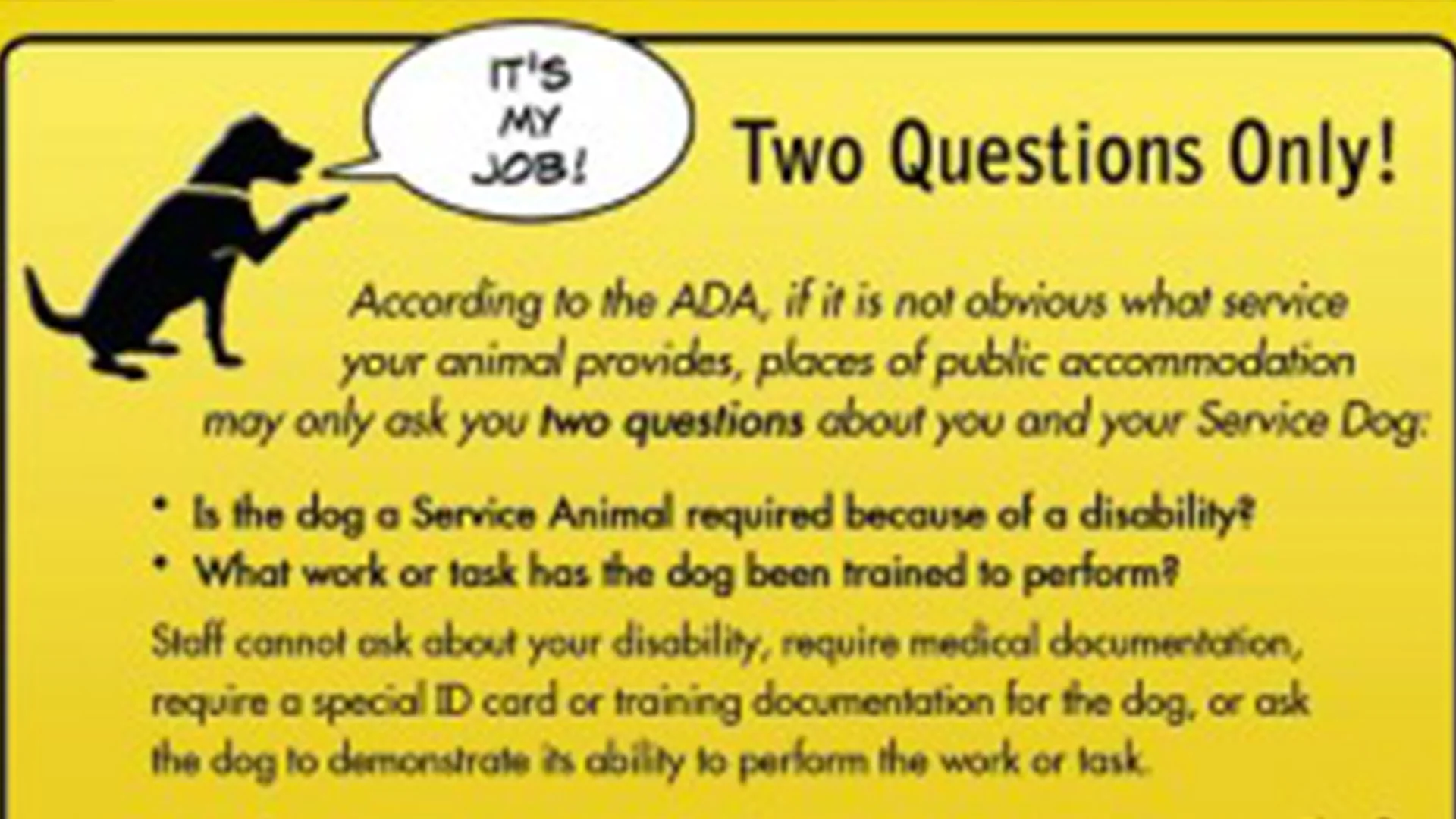
Under ADA rules for covered public settings, a service dog is individually trained in work or tasks directly related to a person’s disability. It is a working partner with care and welfare needs, not simply a pet with a vest.
Explaining it to a child
“That dog has learned ways to help its person with a disability. We give the dog space so it can work. If we speak, we talk to the person.”
A disability may be visible or invisible. You do not need to know a stranger’s diagnosis to behave respectfully.
What trained work can look like
Examples include retrieving an item, responding to a sound, summoning help or performing another individually trained disability-related behavior. Comfort from presence alone is not an ADA task.
Task safety and reliability need individual assessment. A category name such as medical-alert or mobility dog does not prove that every advertised behavior is supported or appropriate.
Access and recognition
A qualifying dog generally accompanies its handler in ADA-covered public areas, with the law’s limitations. It must be housebroken and under control. A separate ADA provision covers trained miniature horses after an individual assessment.
Breed, size, appearance, equipment or one moment of behavior cannot prove qualification. No ADA registry or certification is required. Where the role is not obvious, staff may ask about disability-related need and trained work, not demand medical details or a task demonstration.
Different rules apply in housing, employment and flying. Respect the team, avoid distractions and check the rules for the actual setting when an access question arises.
A safe, successful service-dog partnership needs a trained dog and a prepared human handler. Service Dog Standards works alongside the Americans with Disabilities Act (ADA), providing training and behavior standards and foundational education about both partners’ responsibilities. Experienced trainers use that foundation to prepare clients for individual instruction and the care, practice and public behavior the partnership requires.