

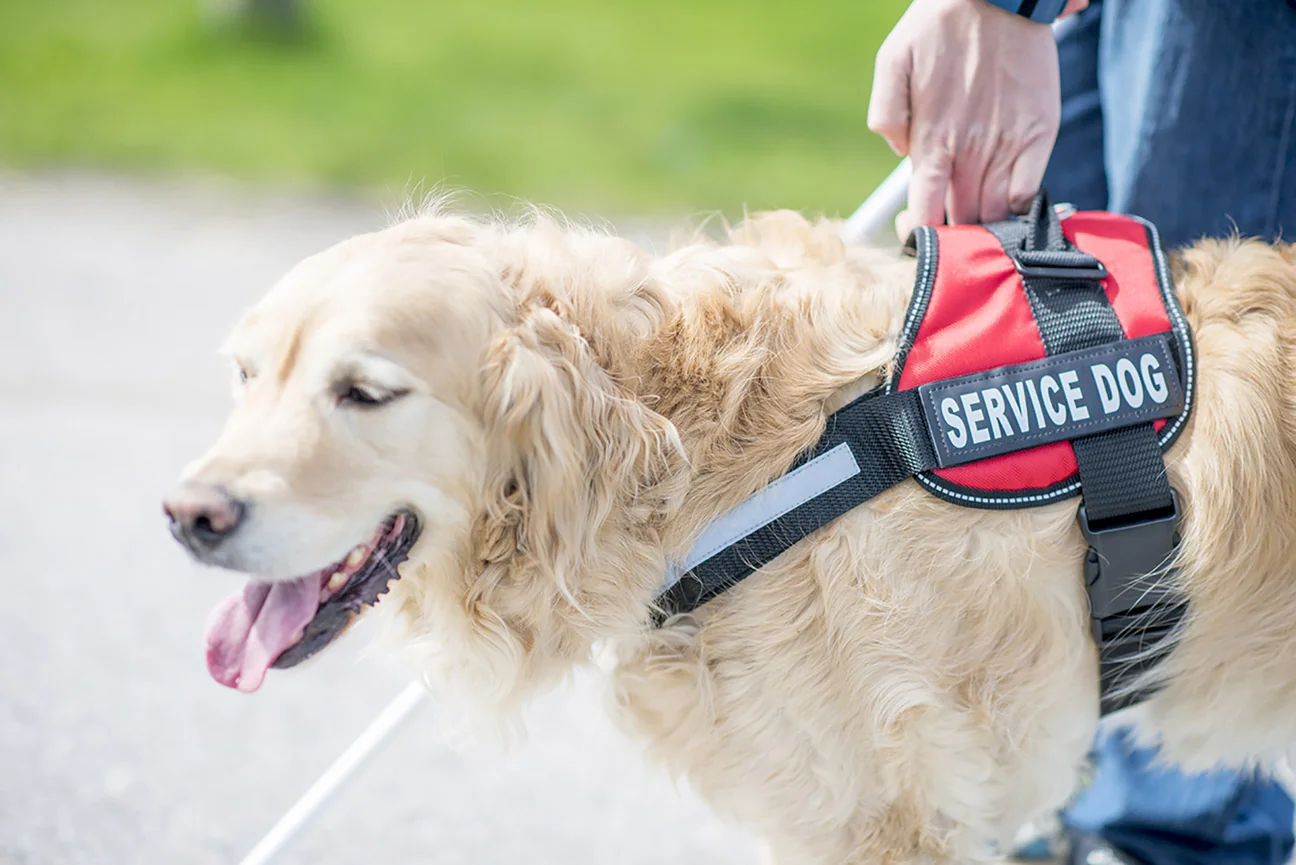
Begin with the assistance you need in daily life. Under ADA public-access rules, a qualifying service dog is individually trained in work or tasks directly related to a person’s disability. Comfort or companionship alone is different.
Consider whether a dog fits your needs
Discuss useful tasks, safety and other support options with relevant professionals. Account for daily care, costs, training time, public attention and backup assistance. A dog does not automatically make life easier.
Tasks are not restricted to physical chores. Psychiatric and other disability-related work can qualify, and the ADA does not require a minimum of two tasks. Choose meaningful trained work rather than building a list to meet an invented numerical rule.
Compare training routes
Some people use a program, work with a private trainer or train their own dog with support. The ADA does not require professional-program training or a particular certificate. Program eligibility, fees, waiting lists, contracts and follow-up vary; inspect the actual terms.
Ask about humane methods, relevant experience, individual assessment and what happens if a candidate is unsuitable. No breed, puppy test or trainer can guarantee the result.
Whichever training route you choose, prepare the human handler as well as the dog. Service Dog Standards works alongside the Americans with Disabilities Act (ADA), providing training and behavior standards and foundational handler education. Experienced trainers use SDS to introduce clients to what training involves and their ongoing responsibilities. That takes some essential education off the trainer’s plate and gives both partners shared expectations before individual instruction begins.
Plan for a minimum of 120 hours of service-dog training, including at least 30 hours preparing for public work. These minimum training benchmarks give the team a foundation to build on. Continue until the dog’s disability-related tasks, public behavior and the human handler’s skills are reliable; reaching an hour total is not the end of training. Maintain those skills throughout the partnership.
Prepare for public work
Teach and maintain appropriate tasks, house training and effective control. No dog is infallible. Reduce difficulty or stop work if health, fear or discomfort affects performance.
In an ADA-covered public setting, staff may ask the two permitted questions when the role is not obvious. They may not demand a diagnosis, certification or task demonstration. A dog out of control without effective correction, or not housebroken, may be excluded, while the person must still be offered the service without the dog.
Know the setting
Housing, employment, air travel and state protections for dogs in training have different rules. Documentation is not prohibited in every context. Voluntary standards and registry membership do not grant legal rights or replace the requirements.
Represent training and status honestly. The legal consequences of misrepresentation depend on the applicable law, not a blanket claim that every instance violates one federal fraud rule.