
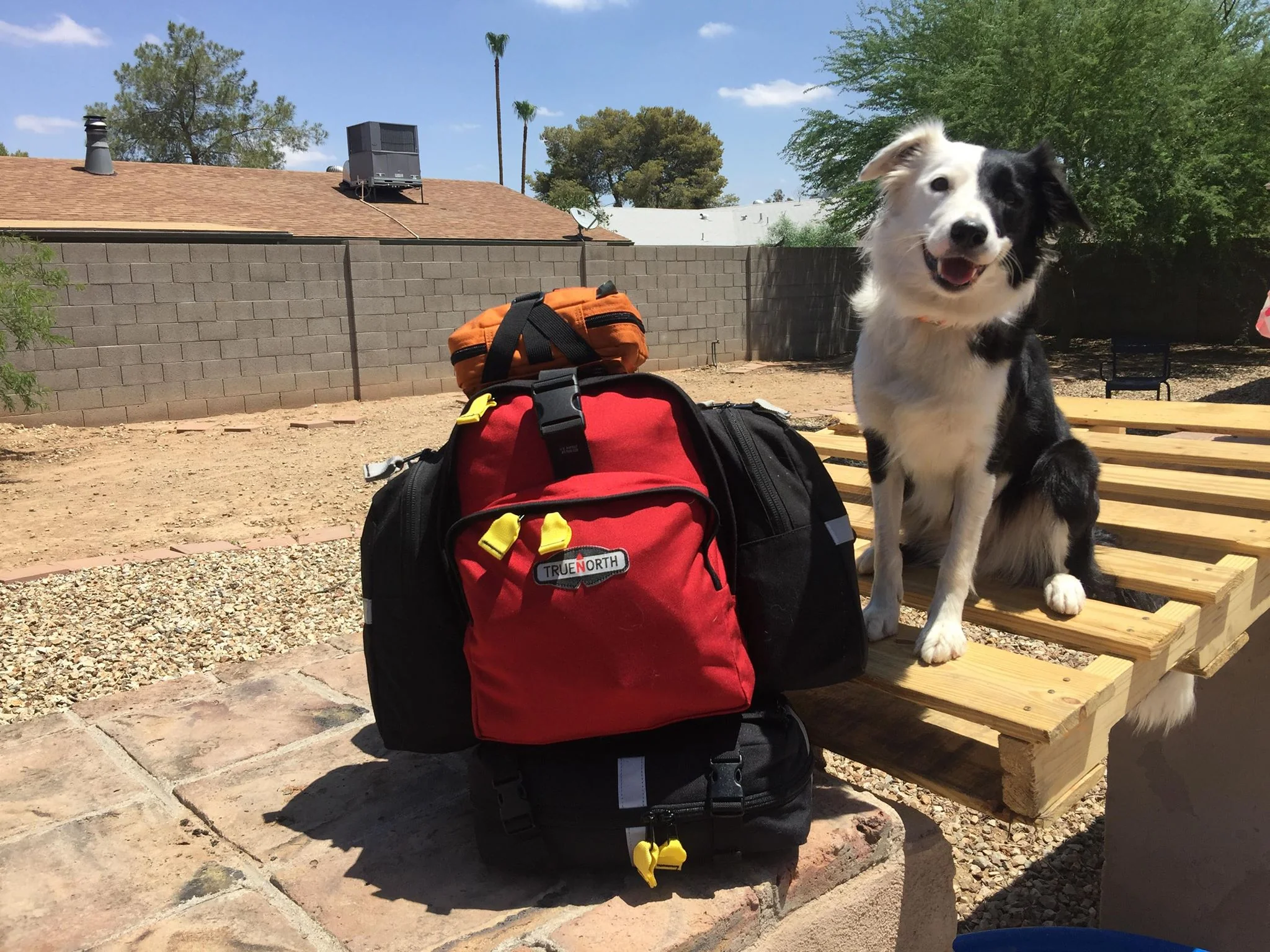
Search-and-rescue dogs work with trained handlers as part of an organized response. They are distinct from service dogs trained to assist an individual with a disability.
Different search assignments
Teams may specialize in searching for living people in wilderness or collapsed structures, following a particular person’s scent, or locating human remains. Water searches require additional methods and appropriately trained personnel. A live-find dog and a human-remains dog do not necessarily share the same training or indication.
The dog is part of a larger system
Handlers assess the search area, hazards, wind, terrain, information about the missing person and the dog’s response. Scent detection is affected by conditions. A dog cannot be promised to find any person at a fixed distance or depth, and no indication does not prove an area contains no person.
Teams need ongoing training, assessed capability, veterinary care, rest and safe deployment practices. Water and workload needs vary; a fixed daily fluid allowance is not appropriate for every search dog.
How the public can help
Report a missing person to the responsible emergency authority. Preserve potentially relevant information and follow responders’ directions. Do not enter a hazardous search area or deploy a pet without coordination. Investigative detection work, such as accelerant detection, is a separate specialty.