
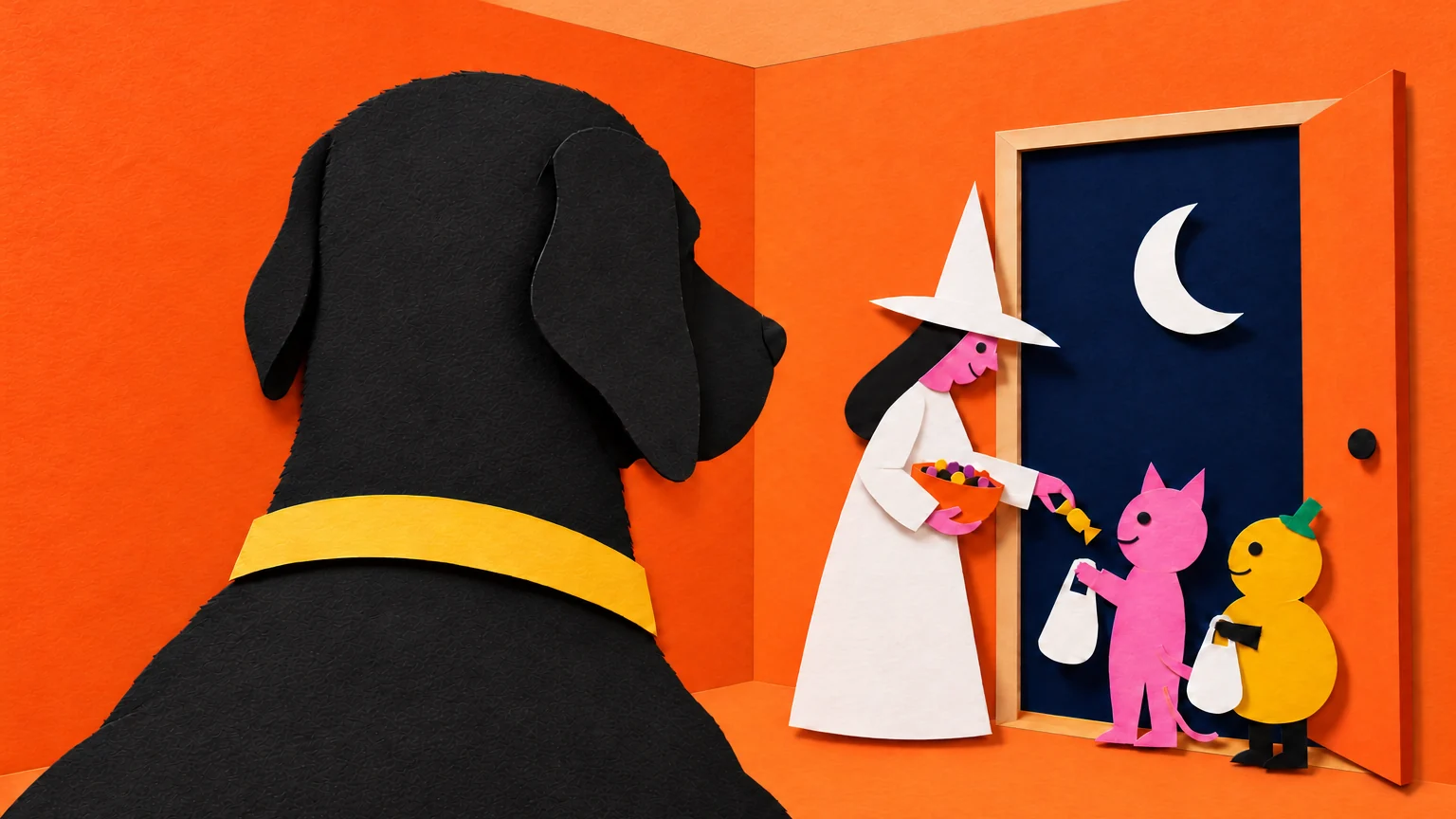
The doorbell rings, a small witch appears, and another group is already coming up the walk. Alongside the usual precautions about chocolate and xylitol, Halloween calls for a plan for all those visitors. Whether you have a service dog or a family pet, decide where your dog will settle and how you’ll handle the door before the evening begins.
Decide who’s answering the door
Start with what you and your dog need. If you rely on your service dog staying close, you might spend the evening together in a quieter room while someone else handles the candy. If you’re home alone, putting a bowl outside with a note can save repeated trips to the door. You’re allowed to enjoy Halloween without taking a shift as the neighborhood receptionist.
For a dog who is comfortable watching visitors, choose a resting spot well back from the entrance. A familiar bed or mat can give them somewhere to settle, but a “stay” cue shouldn’t be your only protection against an open door. Prevent access to the doorway with a suitable gate, closed interior door or a leash you can manage safely. Keep walkways clear, including the route your dog needs to reach you.
Practice settling before opening the door
If your dog already knows a cue such as “bed” or “place,” rehearse the part you’ll actually need: going to that spot while you move toward the door. Begin without a visitor. Reward your dog on the bed, take a step away, then return and reward again. Build up to touching the handle and briefly opening the door, with a barrier in place.
Work on the doorbell separately
If the sound gets your dog excited, a quiet recording lets you practice below full volume. Play it once, reward, and pause. Your dog should still be able to eat and respond comfortably; if they rush the door or become worried, lower the volume or stop. Dogs Trust’s visitor-training guide explains how to build a bed cue and add door sounds gradually.
Introduce costumes before Halloween
A familiar person in a costume can be another short practice session. Let your dog observe from a comfortable distance while that person talks and moves normally. Don’t have anyone leap out to test the dog. Virginia Tech’s veterinary teaching hospital recommends introducing costumes gradually, with rewards and somewhere quiet to retreat.
Try a short trunk-or-treat visit
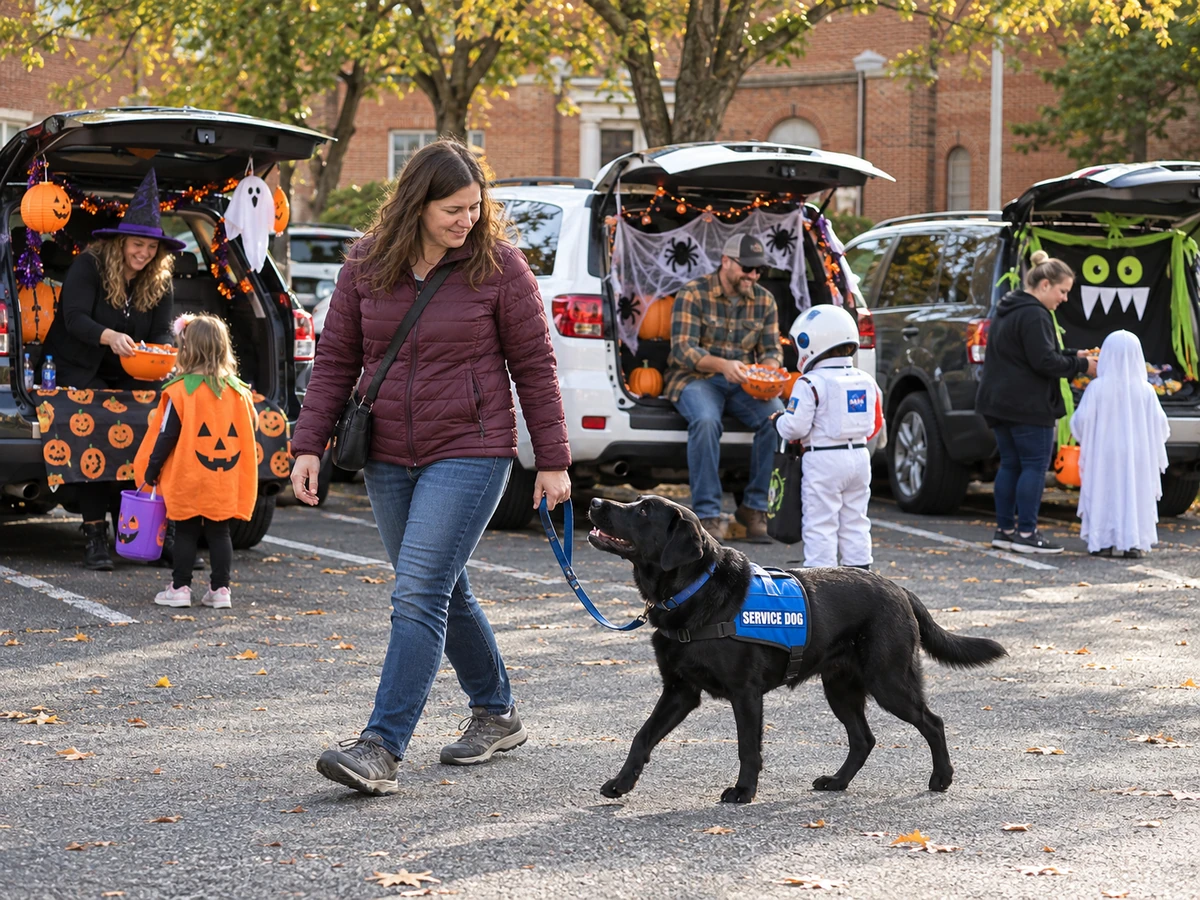
An outdoor trunk-or-treat can also be a useful place to practice around costumes if your dog is already comfortable in public. Many communities hold these or similar events before Halloween. Go at a quieter time and start at the edge, where your dog can watch without being surrounded. Reward them for looking back to you and walking calmly beside you. The outdoor space gives you room to adjust your distance and take a break. Keep the visit short; your dog can get used to costumes without greeting everyone wearing one.
With Halloween only a few days away, use the skills your dog already has. A busy trick-or-treating night is a poor deadline for teaching a brand-new settle.
Take some noise out of the evening
If your doorbell allows it, silence the indoor chime and use its phone notification instead. A visible note asking visitors not to ring or knock can help, though you’ll still need a plan for the child who misses it. If another person can hand out candy outside, visitors may never need to reach the door.
Close curtains if passing costumes keep drawing your dog to the window. Familiar background sound, such as the television at an ordinary volume, may soften some of the outside noise. The American Animal Hospital Association recommends reducing exposure to the sounds and sights that upset your dog. Keep flashing or motion-activated decorations away from their resting area. There are enough surprises arriving on the porch.
Watch your dog between visitors
A dog can remain in position and still be uncomfortable. Notice whether yours relaxes after each group leaves. Can they look away from the doorway, take a familiar reward and settle again? Or are they watching more intently, getting up repeatedly or taking longer to recover?
Pacing, a tucked tail, ears held back, repeated lip licking or panting when the dog isn’t hot can be signs of unease. Look at the whole dog and the situation; one yawn doesn’t tell you everything.
If your dog is struggling, close the door and help them move somewhere quieter. Let someone else take over, put the candy outside or finish handing it out for the night. Don’t keep asking for another stay while the dog gets more upset. A service dog who needs to be near you can take that break with you.
Keep the candy out of the dog’s evening
Set the candy bowl beyond reach and keep dog rewards separately, where you can get them easily. If a child asks to feed or pet your dog, a simple “Please leave the dog to rest” is enough. You can admire the costume and hand over the candy without arranging a greeting.
Chocolate and products containing the sweetener xylitol can poison dogs; wrappers can also be dangerous if swallowed. Pick up dropped sweets promptly and put filled trick-or-treat bags away. If you think your dog has eaten something harmful, contact your veterinarian or an animal poison service promptly rather than waiting for symptoms.
When the last visitors leave, check the entryway for dropped candy before giving your dog access again. Put the bowl away, close the door and return to your usual evening.