


A useful service dog training book helps you teach the next skill your team needs. That might be reward timing, comfortable everyday behavior or a disability-related task. Start with that purpose, then choose a resource that explains both the steps and when to make them easier.
The books below cover different parts of that work. These descriptions draw on their publishers’ listings, checked on October 24, 2026. They explain the stated scope of each book; they are not claims of hands-on testing by AP.
Choose by the problem you want help with
- Planning across a service dog’s working life: consider Kea Grace’s The Ultimate Service Dog Training Manual.
- Learning reward timing and small training steps: start with Karen Pryor’s Getting Started: Clicker Training for Dogs.
- Raising a puppy and teaching everyday foundations: consider Kenneth and Debbie Martin’s Puppy Start Right.
- Coaching owner-trainers as a professional: look at Veronica Sanchez’s Service Dog Coaching.
- Understanding focus and relaxation around distractions: discuss Leslie McDevitt’s Control Unleashed: Reactive to Relaxed with your trainer.
Choose the resource that fits the immediate question. You do not need to buy all five, and finishing a book does not establish that a dog is ready for service work.
What each book covers
The Ultimate Service Dog Training Manual — Keagen J. Grace (Kea Grace)
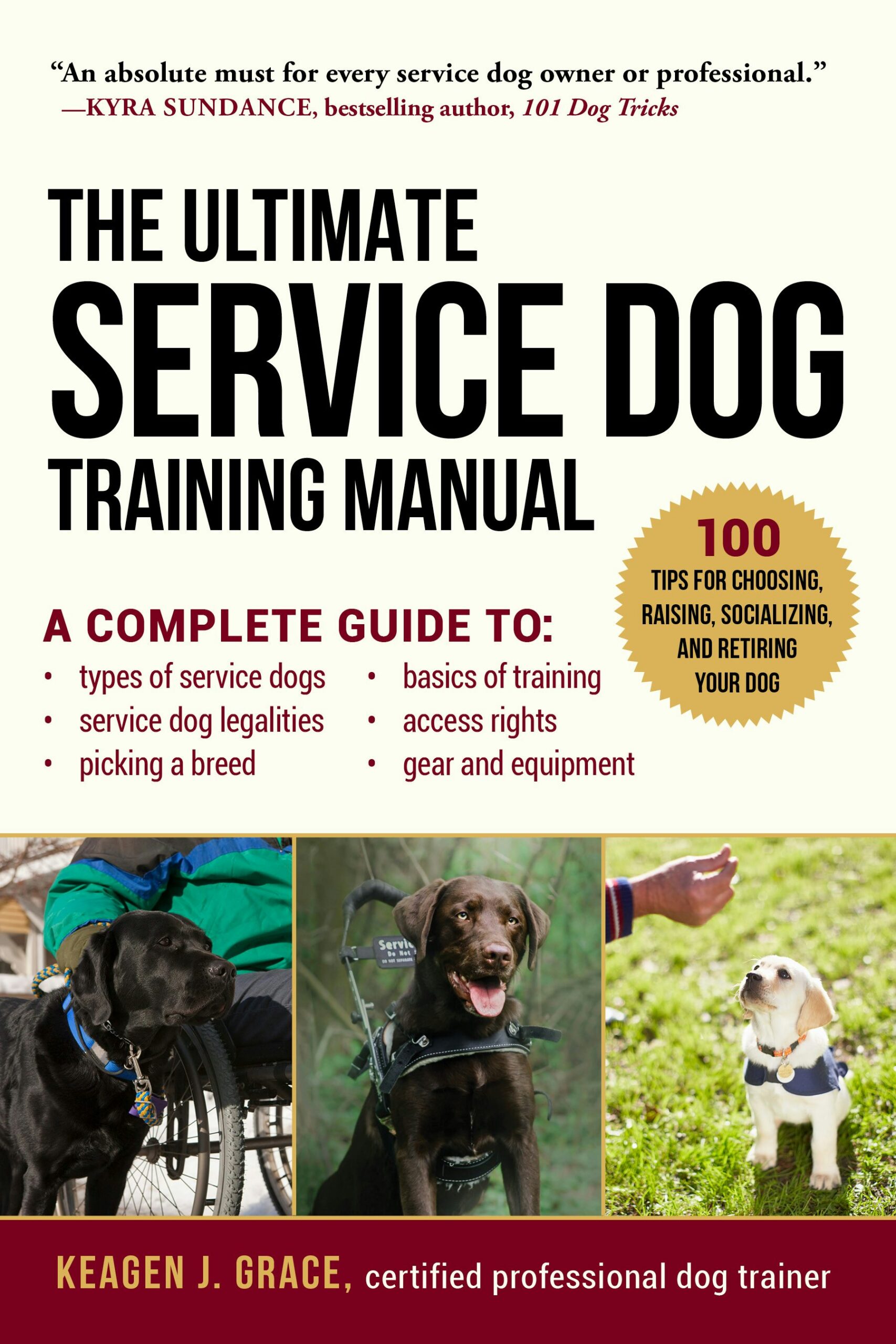
For a broad view of life with a service dog, start here. Skyhorse’s 2020 manual covers choosing a candidate, the costs of owner-training, task training, socialization, work and school, and retirement. It can help you identify the questions you need to work through with a trainer, from assessing a prospective partner to planning a change in an older dog’s role.
Kea Grace is published as Keagen J. Grace on the cover and in retailer listings. The full title is The Ultimate Service Dog Training Manual: 100 Tips for Choosing, Raising, Socializing, and Retiring Your Dog. See Skyhorse’s description and buying options, including Amazon, Barnes & Noble and Bookshop.org. This listing was checked on October 30, 2026.
Getting Started: Clicker Training for Dogs — Karen Pryor
Consider this for learning how a reward marker works and how to build behavior in small steps. The publisher describes foundations including timing, shaping and targeting. Those mechanics are useful before starting an exercise such as AP’s retrieve training series. It is a general training resource; an individual service dog task still needs its own plan.
See the publisher’s description and available formats.
Puppy Start Right: Foundation Training for the Companion Dog — Kenneth Martin and Debbie Martin
This book covers puppy development, socialization, house training and foundation exercises. It may be useful when your immediate questions are about raising a puppy and building everyday skills. Those foundations also matter for a future working partner, but the book’s companion-dog focus does not establish a puppy’s suitability for service work.
Read the publisher’s topic list. For a specific bathroom question, start with when to take a puppy out after eating or drinking.
Service Dog Coaching: A Guide for Pet Dog Trainers — Veronica Sanchez
Dogwise’s 2019 title is aimed at professional pet dog trainers who want to coach people with disabilities. Its stated scope includes candidate characteristics, coaching owner-trainers, task work and public access. If you are choosing a trainer, the subject areas can help you prepare questions about the support you need. A book for trainers is not a substitute for an assessment of your own team.
Read Dogwise’s description of the book.
Control Unleashed: Reactive to Relaxed — Leslie McDevitt
This 2019 book addresses focus, relaxation and behavior in stimulating situations. It can be a topic to discuss with a reward-based trainer when you need help adapting practice. A dog’s ongoing fear or reactivity also deserves an individual assessment; completing exercises does not, by itself, establish readiness for public work.
What to check before choosing a resource
- Audience: Is it written for a first-time handler, an experienced trainer or someone raising a companion dog?
- Method: Look for rewards, manageable steps and guidance on responding to confusion or stress. AVSAB recommends reward-based training.
- Accessibility: Can you adapt the cue, reward delivery, equipment and practice position to your needs?
- Scope: Check publication details and use current official guidance for legal questions. Prices, formats and course availability can change.
Free resources to use alongside a book
For U.S. access and training questions, start with the DOJ service-animal FAQs. For the method behind an exercise, read AVSAB’s humane dog training statement. These answer different questions; a legal information page is not a training lesson.
AP’s retrieve series breaks one skill into a sequence. The public behavior guide gives examples of preparing for queues, distractions and settling. If you are still considering a candidate, begin with the factors that affect suitability.
Questions to ask before paying for a course
Ask to see a sample lesson and a clear explanation of the instructor’s methods. Find out how feedback works, whether lessons have captions or transcripts you need, and how exercises can be adapted to your cueing and reward delivery. Check what happens when the dog struggles, what support is included and the cancellation terms.
A useful answer is specific: “We can review a video of your reward delivery and adapt the setup.” A promise that every dog will qualify, or that buying a certificate creates access rights, is not a sound basis for choosing instruction.
Include the human side of training
Preparing the human handler is a crucial part of service-dog training. Experienced trainers use Service Dog Standards, which works alongside the Americans with Disabilities Act (ADA), to introduce clients to detailed training and behavior standards and their ongoing responsibilities. Including that foundation in your process takes some essential education off your plate and gives you shared expectations for teaching the individual skills both partners need.
Choose one exercise you can explain clearly: what starts it, what the dog does and what you will reward. If a resource leaves you guessing, bring that specific question to a suitable trainer. AP’s training-plan guide and skills checklist can help organize the next step.