

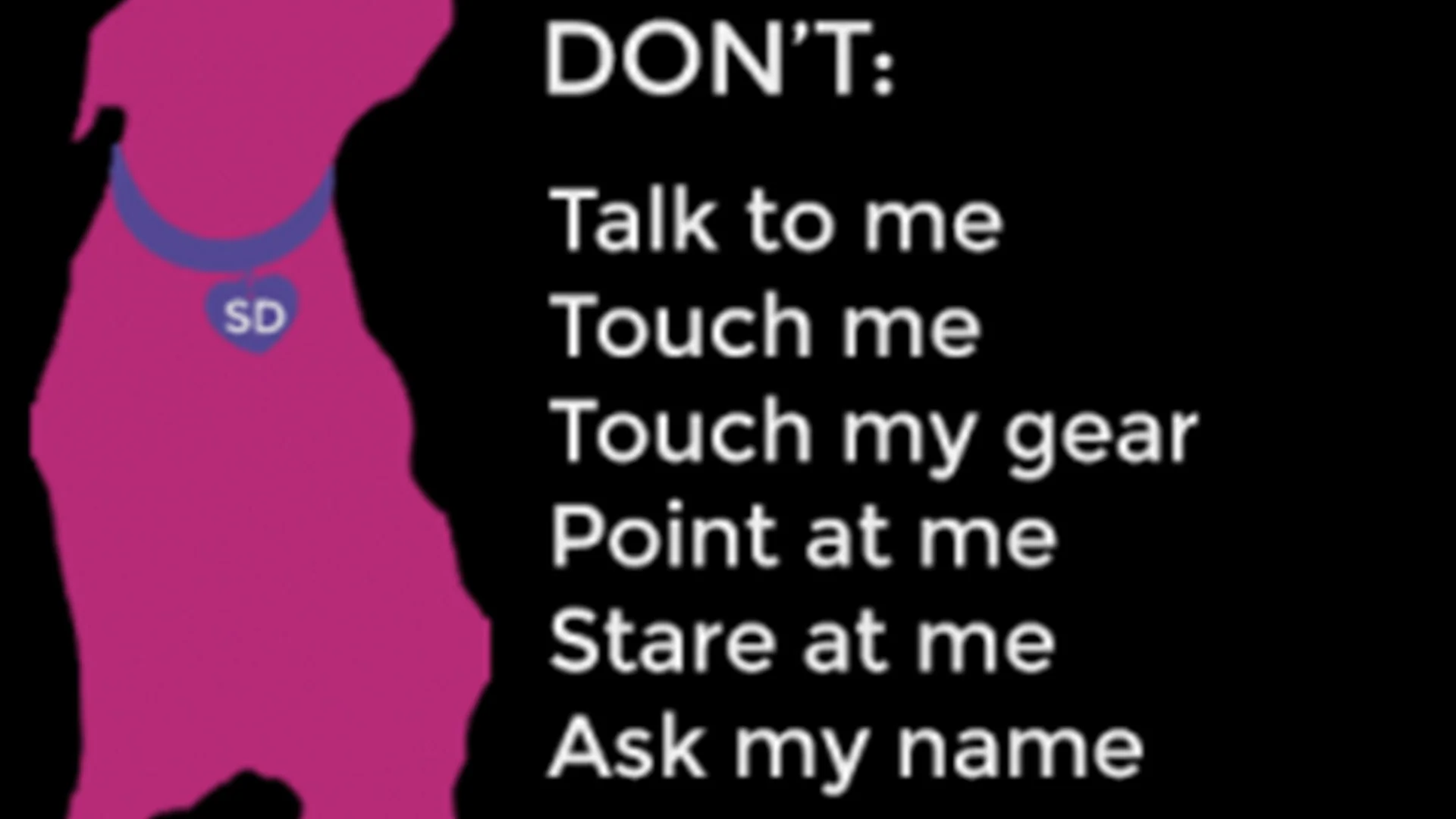
Service-dog handlers should be able to go about daily life without becoming the center of attention. These habits make public interactions easier.
- Give a working dog space. Do not touch, feed, call to or deliberately distract it without the handler’s permission.
- Do not assume the person is blind. Dogs can perform different disability-related tasks.
- Do not assume an invisible disability means the dog is in training. Appearance does not tell you the person’s needs.
- Respect medical privacy. Curiosity does not entitle a stranger to a diagnosis or personal history.
- Speak to the person. Avoid pointing, whispering or treating the team as a spectacle.
- Skip comments about bodies and equipment. Gear should be appropriate and humane, but an unsolicited public critique is seldom helpful. Report an actual welfare or safety concern through an appropriate channel.
- Ask before photographing. Respect the answer and avoid distracting the dog to obtain a picture.
- Do not judge by breed or size. Small dogs can do retrieval and other useful work. No breed is guaranteed suitable or free of allergens.
- Offer help without taking over. Ask the person and follow their directions if assistance is welcome.
- Remember the individual. A handler may be happy to chat or may simply need to finish an errand. Respect either choice.
For staff in ADA-covered public settings, access questions follow a specific legal rule. That is different from strangers requesting private information.